Evaluating Football Goalkeeper Distribution and Buildup Quality: A Risk-Adjusted Review
If you want a direct answer: the quality of a football goalkeeper’s distribution is not determined by the number of long balls completed or by a high short-pass percentage. It is determined by how safely and quickly the keeper enables the team to progress the ball under pressure, and how consistent that process remains across different opponents and match states. A dependable distribution keeper is essentially a risk manager for the first phase of buildup, not a highlight generator.
What “Buildup Quality” Actually Means for a Goalkeeper
Modern goalkeepers are no longer limited to saving shots and launching punts. Many coaches now treat the keeper as an extra outfield player who participates in initial buildup. When a team plays out from the back, the keeper becomes the first option for center-backs under pressure. That small tactical shift changes everything about how distribution should be judged.
Buildup quality covers at least four distinct actions: receiving the ball under pressure, choosing the correct passing lane, executing the pass with the right weight and direction, and resetting the team’s shape for the next phase. A keeper might excel at three of these but fail at the fourth, which still creates structural problems. This is why a single statistic such as pass completion rate can be misleading. It treats all passes equally, even though a five-meter sideways pass in a low-pressure situation and a 30-meter line-breaking pass under an opponent’s press are completely different actions.
The main challenge for anyone evaluating keepers is separating noise from signal. Raw numbers often hide the context behind each action, and context is almost everything in buildup analysis.
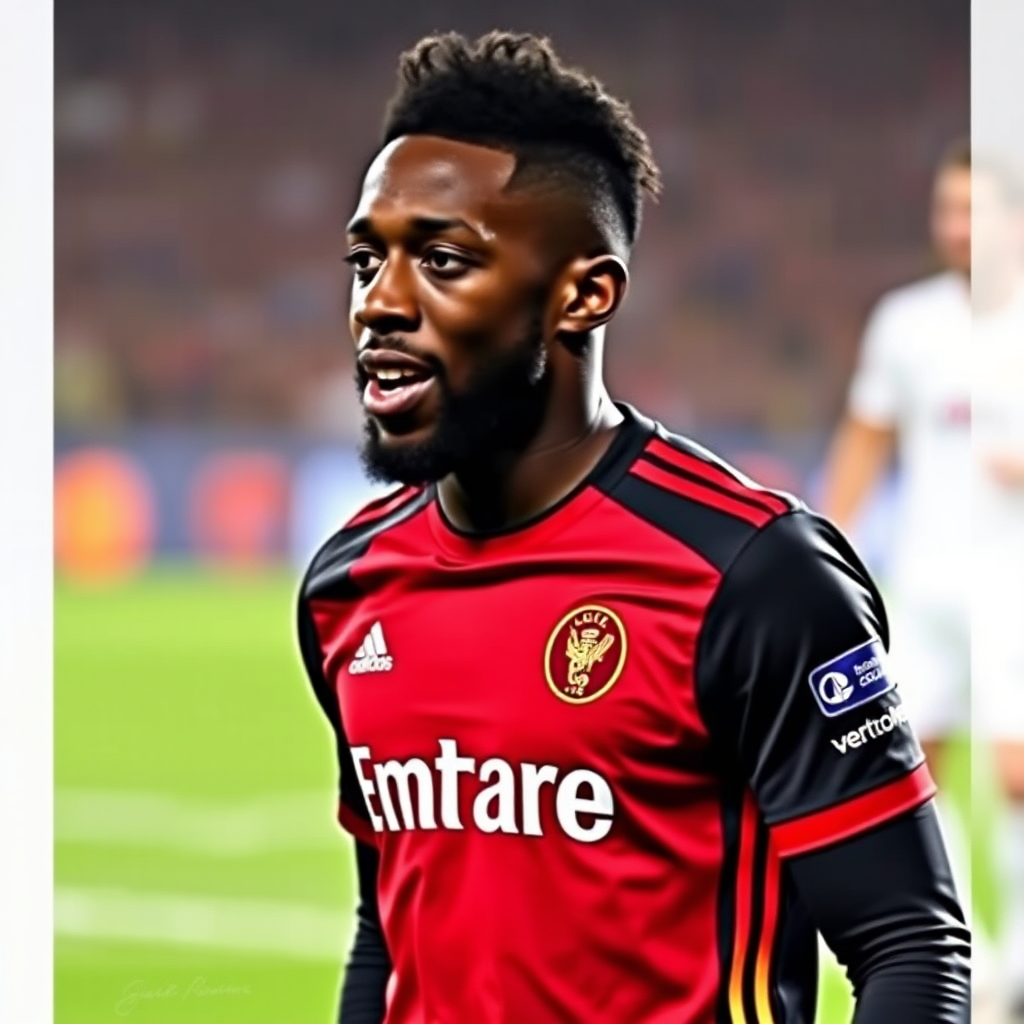
 Hình minh hoạ: zowin
A Five-Criteria Scoring Model for Distribution
To bring structure to the evaluation process, I use five criteria that reflect how a goalkeeper’s distribution performs in real match conditions: transparency, speed, usability, security, and support. These criteria work for both individual performance analysis and for comparing how different sources present goalkeeper data.
| Criterion | What it measures | Key indicators to watch |
|---|---|---|
| Transparency | Whether the underlying data clearly separates different pass types and match contexts | Clear definitions of short, medium, and long passes; stats that distinguish pressured from unpressured actions |
| Speed | How quickly the keeper reads the situation and releases the ball | First-time passes, time spent on the ball under pressure, and frequency of quick switches of play |
| Usability | How well the keeper’s passing profile fits the team’s tactical system | Passing range adjusted to the coach’s style; distribution that creates advantages rather than simply moving the ball sideways |
| Security | The level of risk the keeper takes in dangerous areas and the cost when things go wrong | Number of unforced turnovers in the defensive third, decision-making consistency, and ability to handle high-pressure moments |
| Support | How much the keeper’s output depends on the movement and positioning of teammates | Angles offered by center-backs, availability of midfield drop-offs, and whether the team’s structure makes distribution easier or harder |

Detailed Analysis of Each Criterion
Transparency: Verifying What the Numbers Actually Show
Transparency matters before any tactical judgment can be made. If a data source combines all passes into one bucket, then the resulting completion percentage tells you very little about a keeper’s buildup quality. A goalkeeper playing in a low-block team that rarely faces pressure will naturally have a higher completion rate than a keeper asked to play out from the back against a high press. Comparing those two numbers without context is not analysis, it is illusion.
When you look at any goalkeeper profile, ask simple verification questions. Does the source separate passing distance zones? Does it record pressure events such as the number of touches before a pass or the distance of the nearest opponent? Does the data come from optical tracking, human annotation, or a mix? These questions determine whether the numbers deserve to drive a serious conclusion.
The same verification principle applies to the platforms where people watch match review content. Some fans look for quick clips of goalkeeper actions instead of raw statistical tables. A streaming-adjacent service such as zowin might offer convenient replays, but convenience is not the same as reliability; you still have to check whether the visual feed matches the full match context and whether any commentary attached to it respects basic football facts.
Speed: The Value of a Quick Release
In buildup, speed is not about playing the ball fast just for the sake of tempo. It is about releasing the ball before the opponent’s pressing structure has time to react. A keeper who takes two touches, scans the field, and delivers a precise pass into the first line often turns an uncomfortable situation into a numerical advantage.
Several observable indicators reflect this quality. First, the number of first-time passes from the keeper, especially after a back-pass, shows whether the keeper already knows where the next pass should go before the ball arrives. Second, the time kept between control and release in high-pressure zones measures the keeper’s composure. Third, the willingness to switch play quickly from one flank to the other signals the ability to exploit the weak side before defenders shift over.
However, speed must not be confused with recklessness. A fast decision that leads to an unnecessary turnover in the box is not a sign of good distribution, it is a failure of judgment. The most valuable distribution keepers are fast only when the fast option is also the safe option.
Usability: Distribution as a Tactical Fit
A keeper’s distribution skills only make sense inside a tactical framework. A long-ball specialist who regularly hits the opposition half with accurate diagonal passes is an excellent fit for a team that wants direct transitions. The same keeper becomes less useful to a possession side whose buildup starts with short pulls and quick passes among the back line.
Usability also depends on the opponent. In matches where the front line presses aggressively, a keeper who can calmly find the free center-back is a game-changer. Against a team that drops off and protects the middle of the pitch, the same short-passing approach can become predictable and ineffective; the keeper must be able to adjust the depth of distribution accordingly.
The practical conclusion is that no player is “good at distribution” in the abstract. A scout or analyst should first identify the tactical identity of the team and then assess how the keeper’s profile supports or weakens that identity. When the fit is right, the keeper makes the team’s buildup more stable. When the fit is wrong, even technically strong keepers look exposed.
Security: Controlling Risk in the Defensive Third
Distribution is a form of risk management. Every pass in the defensive third carries a potential downside far bigger than its upside. A successful short pass often only maintains possession, which is useful but not dramatic. A failed short pass, however, creates a high-danger chance for the opponent almost immediately.
Therefore, the security criterion deserves its own weight in any evaluation. Look for patterns rather than isolated mistakes. A keeper who concedes one goal per season because of a bad pass out may be acceptable to a coach who values buildup quality. A keeper who makes three high-risk passes per match and asks the defense to constantly recover is creating long-term instability, regardless of the completion rate.
It is also important to separate keeper errors from team errors. If the center-back receives a simple pass and then gets caught on the ball, the goalkeeper’s distribution should not be blamed. Conversely, if the keeper chooses a pass into a crowded central area while a wide player is completely free, the responsibility belongs to the keeper. Analysts need a strict coding system to make that separation before judging security.
Support: The Team’s Role in the Keeper’s Output
No goalkeeper builds an attack alone. The movement of center-backs, the dropping of midfielders, and the positioning of full-backs all determine whether a distribution option is available. When a team fails to give the keeper a clean angle or a free passing lane, the keeper is often forced into long balls that have little tactical intention.
This means that when comparing goalkeepers, you must account for the support structure around them. A keeper playing behind a well-coordinated pressing-resistant team will naturally display more confident short distribution. Another keeper playing for a side with poor spacing may be forced into more defensive kicks, which lowers their completion or expected buildup value even though the individual skill level is similar.
The evaluation process should therefore include a question about the team’s support: Are the passing angles actually available? Are players moving into good positions? Does the coach’s buildup routine give the keeper a clear first option? Without answering these questions, any comparison of distribution stats between goalkeepers is incomplete.
Strengths and Limitations of This Evaluation Approach
The main strength of the five-criteria model is its focus on context. It forces the analyst to ask why a keeper’s numbers look the way they do, instead of simply accepting a headline completion rate. It also makes comparisons more honest because it separates the keeper’s decisions from the team’s structural support.
Another strength is repeatability. The same criteria can be applied to different leagues, different match weeks, and different tactical systems. A coach or scout can build a library of observations based on transparency, speed, usability, security, and support across a full season.
But there are also clear limitations. First, some criteria rely on data that is not publicly available, such as pressure events and pass lane quality. Without access to advanced tracking data, an analyst has to watch full matches or extended clips, which takes significant time. Second, the model requires a sample size that is too large for casual fans. Evaluating a goalkeeper across one or two matches is not enough to reach a reliable conclusion, especially because opponent behavior varies so much.
Finally, the model does not produce a single numeric grade. It is designed for qualitative assessment rather than automated ranking. That is intentional, but it means the method works best for an experienced analyst who can weigh each dimension reasonably.

Who Should Use This Framework
Any football professional who needs a structured way to judge goalkeeping work can benefit from this framework. Scouts use it to watch transfer targets over several matches and to check whether a keeper can handle the press of the league they are entering. Data analysts use it to build context-aware metrics and avoid misleading raw numbers.
Coaches also use this approach when planning buildup routines. If the evaluation shows that the keeper is fast and secure but the team’s support is weak, the root cause may lie in the training ground, not in the goalkeeper. If the evaluation shows that the keeper lacks speed, the coach might adapt by giving the defense a more direct option.
For fans who follow football deeper than the highlights, applying these criteria transforms every match into a richer experience. Instead of screaming about a keeper’s “bad pass out,” you can ask whether the pass was the right decision under pressure, whether the receiver was static, and whether the structure around the keeper failed first.
Pre-Use Checklist: Before You Rely on Any Distribution Evaluation
The following checklist is designed for anyone who wants to analyze goalkeepers seriously without falling into common traps.
- Check how the data source defines each pass type. If definitions are absent, the numbers are too weak to support a firm conclusion.
- Confirm whether the statistic incorporates pressure. A pass completed against no opponent is not equivalent to one made with a striker closing down.
- Watch a minimum of three or four full matches for a single keeper, not edited highlights that exclude errors.
- Separate keeper decisions from teammate mistakes before assigning blame for a failed buildup.
- Always apply the same set of criteria to the opposition goalkeeper as well, so you have a fair baseline.
- Triangulate your observations with at least one other source; most single sources can have blind spots.
Key Risks to Remember
Whenever you analyze football data or use a platform to watch and discuss goalkeeper performances, you need to keep certain risks front and center. First, not every source that looks like a football statistics hub actually publishes verified data. Always ask where the numbers come from before using them in a scouting report or a tactical article. If you see a platform that mixes match entertainment with statistics, such as a cổng game zowin appearing in Vietnamese search results, understand that an entertainment-oriented service is very different from an audited data provider. Verify its methodology before treating anything it shows as evidence.
Second, never overreact to a small sample. A keeper can deliver a heroic display in one match and looks catastrophic in the next. Strong distribution judgment requires a longer observation window and patience.
Third, avoid the trap of confirmation bias. Once you believe a keeper is “good with his feet,” your brain tends to remember accurate passes and forget the turnovers. That is precisely why the five-criteria model exists, to keep the evaluation procedure honest.
Finally, in contexts where football analysis is connected to betting or gaming-like platforms, remember that no prediction is guaranteed. Distribution quality influences the way a match flows, but it does not determine a result. Keeping a personal limit on how much time and money you commit to any of those environments is the most responsible way to stay objective.
FAQ: Goalkeeper Distribution and Buildup Quality
What is the most important stat for evaluating goalkeeper distribution?
There is no single stat. The most useful combination includes the percentage of pressured passes attempted, the number of first-time passes, and the rate of unforced turnovers in the defensive third. Together, those numbers reflect decision-making better than pass completion alone.
Can a goalkeeper with poor passing still be useful in buildup?
Sometimes, but only if the team compensates. If the coach builds a structure where the keeper rarely needs to pass under pressure and the center-backs take over the buildup role, the keeper’s distribution can be hidden. In modern football, teams are less willing to carry that limitation.
How many matches do I need to watch before judging a keeper?
I recommend at least three to five full matches against different types of opponents. One match against a team that presses heavily and another against a deep block will reveal a much more complete picture than two similar fixtures.
Why do raw pass completion rates mislead people?
Because they ignore context. A keeper who only plays short passes to unchallenged defenders will always have a high completion rate, while a keeper who attempts dangerous line-breaking passes under pressure will have a lower one even if their decision-making is superior.
Does goalkeeper distribution directly affect win probability?
Good distribution helps a team maintain control after regaining the ball and can create advances that are not available through pressing alone. In that sense, it contributes to match control, but it is just one of many factors that define a result.